
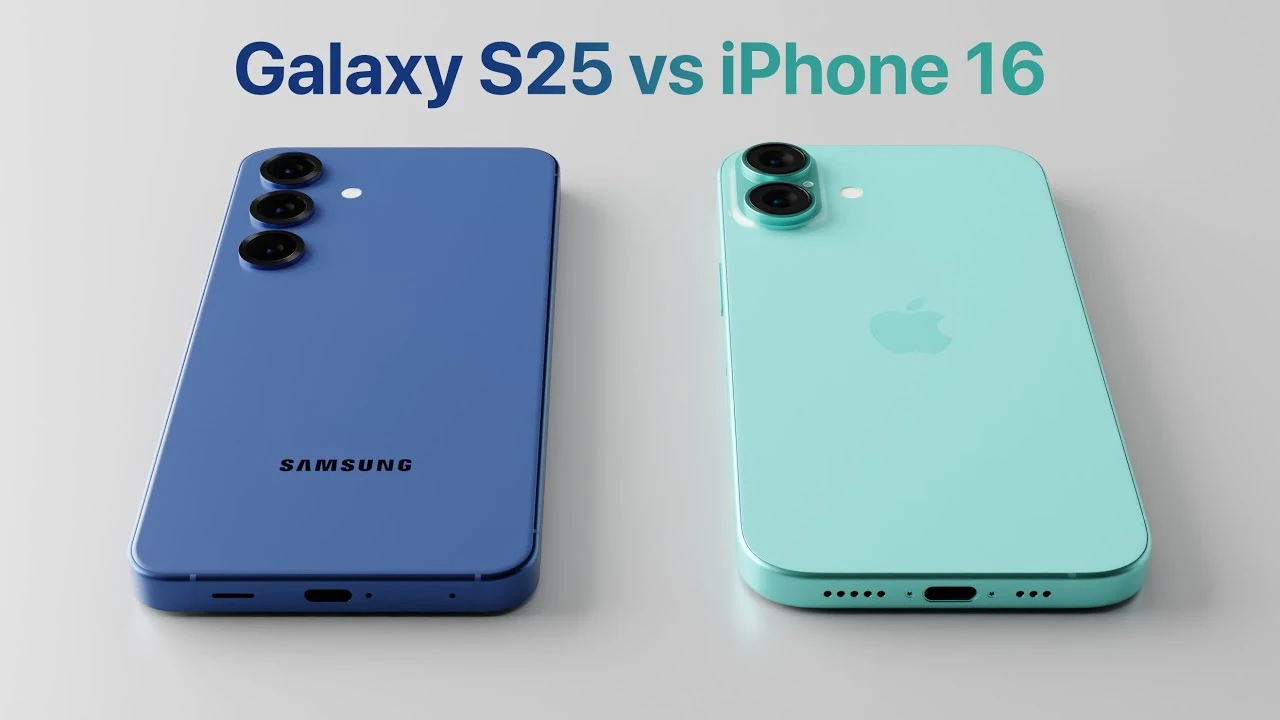
The iPhone 16 and Samsung Galaxy are the hottest flagship phones of 2025 — and for good reason. Both pack cutting-edge chips, advanced AI features, and stunning displays, but they approach innovation in very different ways. Apple sticks to its seamless iOS ecosystem with the lightning-fast A18 chip and Apple Intelligence integration, while Samsung brings the Snapdragon 8 Elite for Galaxy, Galaxy AI, and a brighter, smoother AMOLED display.
iPhone 16 vs Galaxy S25: Specs at a Glance
Before diving into real-world performance, here’s a quick spec comparison to see how the iPhone 16 vs Galaxy S25 stack up on paper.
| Feature | iPhone 16 | Samsung Galaxy S25 |
|---|---|---|
| Launch Year | 2025 | 2025 |
| Processor | Apple A18 | Snapdragon 8 Elite for Galaxy |
| RAM | 8 GB | 12 GB |
| Storage | 128GB–1TB | 256GB–1TB |
| Display | 6.1″ OLED, 60 Hz, ~2000 nits | 6.2″ Dynamic AMOLED 2X, 120 Hz, ~2600 nits |
| Battery | ~3561 mAh | 4000 mAh |
| Charging | 20 W wired, MagSafe wireless | 25 W wired, wireless |
| Main Camera | 48MP + 12MP ultra-wide | 50MP + 12MP ultra-wide + 10MP telephoto (3×) |
| OS | iOS 18 | Android 15 (One UI 7) |
| Updates | ~5 years | ~7 years |
Quick Takeaways:
- Galaxy S25 offers a faster refresh rate (120 Hz) for smoother scrolling and a larger battery for longer life.
- iPhone 16 delivers unmatched single-core performance and tighter ecosystem integration.
- Both support powerful AI features, but Samsung leans into more visual and multitasking AI tools, while Apple focuses on privacy and seamless integration.
Design & Build Quality
When you hold these two flagships, the difference is immediately noticeable.
- iPhone 16: Apple sticks to its premium build with an aluminum frame and glass back, now with the new Camera Control button for video zoom and framing. Flat edges give it a sleek, modern feel, while a matte back resists fingerprints. It’s IP68 water- and dust-resistant, meaning it can survive accidental spills and short dips in water.
- Galaxy S25: Samsung opts for a slightly slimmer profile and lighter weight. The polished aluminum frame and Gorilla Glass Victus protection feel sturdy, while the subtly curved edges make it comfortable to hold. It’s also IP68-rated, with finishes that include glossy and matte options depending on color.
Durability & Comfort:
Both phones are tough enough for daily use, but the iPhone’s flat edges can feel sharper in the hand, while the Galaxy’s curves make it more ergonomic for long sessions. The camera bump is slightly more pronounced on the Galaxy, so a case may help it sit flat on a table.
Style & Sustainability:
Apple uses recycled aluminum and rare earth elements in its components, while Samsung also incorporates recycled glass and plastics. If sustainability matters to you, both brands are making progress.
Display & Visual Experience: iPhone 16 vs Samsung Galaxy S25
The display is one of the most important parts of any smartphone, and both the iPhone 16 and Galaxy S25 bring impressive screens, but they take very different approaches.
Samsung Galaxy S25: Samsung is known for its stunning AMOLED displays, and the Galaxy S25 continues this tradition with a 6.2-inch Dynamic AMOLED 2X screen. It offers a smooth 120Hz refresh rate, which means scrolling, animations, and games feel buttery smooth. The peak brightness can reach up to 2600 nits, making it easy to see even in bright sunlight. The screen resolution and pixel density also create sharp, vibrant visuals that pop.
iPhone 16: Apple’s iPhone 16 features a slightly smaller 6.1-inch OLED display with a fixed 60Hz refresh rate. While it doesn’t offer the ultra-smooth 120Hz of the Galaxy, Apple focuses on color accuracy, brightness around 2000 nits, and excellent HDR performance. The display supports True Tone and offers great contrast, making images and videos look natural and crisp.
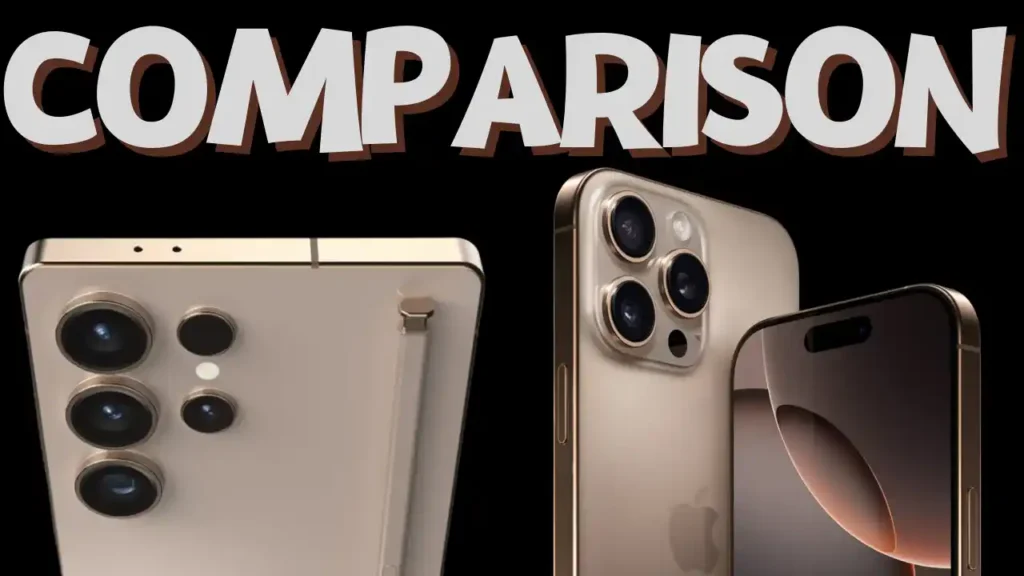
Performance & Software Ecosystem
Performance is where both phones shine, but in different ways thanks to their unique chips and operating systems.
Samsung Galaxy S25: Powered by the Snapdragon 8 Elite for Galaxy, the Galaxy S25 excels in multi-core performance, AI processing, and heavy multitasking. Samsung’s One UI 7 on Android 15 offers deep customization, multitasking features like split-screen apps, and an AI-powered assistant called Galaxy AI with Gemini Live. Plus, Samsung promises up to 7 years of software updates, keeping your phone fresh for longer.
iPhone 16: Apple’s new A18 chip delivers powerful single-core performance, which translates to fast app launches, smooth animations, and excellent gaming performance. iOS 18 brings advanced Apple Intelligence AI features tightly integrated into the system, enhancing everything from photography to voice commands. Apple supports about 5 years of software updates, ensuring your iPhone remains secure and capable.
Photography & Videography
Both phones offer incredible cameras, but their strengths vary depending on what you value most.
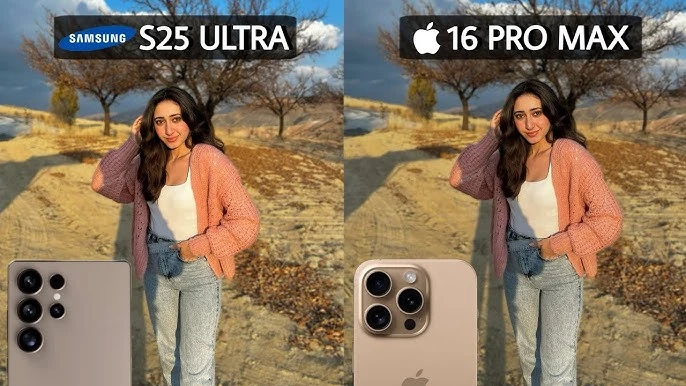
Samsung Galaxy S25: The Galaxy S25 features a triple-camera setup: a 50MP main sensor, a 12MP ultra-wide, and a 10MP telephoto lens with 3x optical zoom. Samsung’s camera app includes manual controls, night mode, and supports 8K video recording. It’s great for users who want versatility and more zoom options for distant shots.
iPhone 16: Apple offers a dual-camera system with a 48MP main sensor and a 12MP ultra-wide lens. While it doesn’t have a dedicated telephoto lens, Apple’s software zoom and computational photography deliver excellent detail and color accuracy, especially in low-light conditions. Video recording is top-notch, with cinematic mode and Dolby Vision HDR support.
Battery Life & Charging: iPhone 16 vs Samsung Galaxy S25
Battery life is a crucial factor for anyone relying on their phone throughout the day, and both the iPhone 16 and Galaxy S25 have made improvements here, but with some differences.
Samsung Galaxy S25: The Galaxy S25 comes with a larger 4,000 mAh battery, offering impressive endurance of about 15 hours and 51 minutes of real-world usage. It supports 25W wired fast charging, which can charge your phone quickly, and also includes wireless charging for convenience.
iPhone 16: The iPhone 16 has a slightly smaller battery, around 3,561 mAh, but still offers solid battery life, roughly 12 hours and 13 minutes under typical use. Apple supports 20W wired charging and MagSafe wireless charging, making it easy to charge both wired and wirelessly.
AI & Smart Features
Artificial Intelligence (AI) is a growing feature in smartphones, and both Apple and Samsung are leveraging AI to enhance the user experience.
Samsung Galaxy S25: Samsung’s Galaxy AI uses Gemini Live technology to offer smarter multitasking, cross-app interactions, and real-time visual AI features. For example, it can help you translate text instantly, organize photos automatically, and personalize app suggestions — all built deeply into Android 15’s One UI 7.
iPhone 16: Apple integrates its AI through Apple Intelligence in iOS 18, focusing on privacy and seamless integration. It improves Siri’s voice recognition, enhances photo editing with smart adjustments, and offers generative AI capabilities to assist with writing, scheduling, and visual recognition.
Price & Value
Price is often the final deciding factor, and here’s how the two compare.
Samsung Galaxy S25: Starting at around $799 for the base model, the Galaxy S25 offers high-end specs like a brighter display, larger battery, and more RAM at a competitive price point. Samsung also offers various configurations, including higher storage and Ultra models with extra features.
iPhone 16: The iPhone 16 starts at about $899, a bit pricier, but offers a polished design, strong ecosystem support, and consistent software updates. While it may have fewer hardware specs on paper, many users value the seamless Apple experience and long-term software support.
Software Updates & Ecosystem Support
Both Apple and Samsung are committed to providing long-term software updates, but their approaches differ.
Samsung Galaxy S25: Samsung promises up to 7 years of software updates on the Galaxy S25, which is impressive for Android devices. This includes major Android OS upgrades and regular security patches. The Galaxy S25 runs Android 15 with Samsung’s One UI 7, which is highly customizable and packed with features that integrate well with Samsung’s other devices like Galaxy Buds, tablets, and smartwatches.
iPhone 16: Apple typically supports iPhones for about 5 years of iOS updates, ensuring your device stays secure and gains new features for a long time. The iPhone 16 runs iOS 18, known for its smooth performance and tight integration across Apple’s ecosystem — including iPads, Macs, Apple Watch, and AirPods. Features like Handoff and Continuity make switching between Apple devices seamless.
Durability & Repairability
How durable and easy to repair a phone is can affect your experience and costs over time.
Samsung Galaxy S25: The Galaxy S25 features Gorilla Glass Victus for durability and is rated IP68 for water and dust resistance, meaning it can handle accidental spills and brief submersion. Samsung offers repair services, but the curved screen edges may make some repairs trickier and slightly more expensive.
iPhone 16: The iPhone 16 uses Ceramic Shield glass on the front, with a durable aluminum frame and IP68 rating as well. Apple provides extensive repair support and an increasing number of repair manuals to encourage easier fixes. The flat edges make it somewhat easier to handle repairs compared to curved designs.
Audio & Connectivity Features
Sound quality and connectivity options enhance your overall phone experience.
Samsung Galaxy S25: The Galaxy S25 comes with stereo speakers tuned by AKG and supports Dolby Atmos for immersive audio. It also includes ultra-wideband (UWB) support, Wi-Fi 7, and 5G connectivity. Samsung supports dual SIM functionality and has a USB-C port for charging and data transfer.
iPhone 16: The iPhone 16 offers stereo speakers with spatial audio support, delivering crisp and balanced sound. It supports 5G and Wi-Fi 6E, but Apple sticks with its proprietary Lightning port instead of USB-C for now. The iPhone features Face ID facial recognition and supports dual SIM with eSIM technology.
Gaming Performance
Gaming is a major use case for many smartphone users, and both the iPhone 16 and Samsung Galaxy S25 deliver powerful gaming experiences, but with some differences.
Samsung Galaxy S25: Equipped with the Snapdragon 8 Elite for Galaxy processor and 12 GB of RAM, the Galaxy S25 handles the most demanding Android games smoothly. The 120Hz AMOLED display enhances gaming visuals with silky-smooth frame rates and vibrant colors. Samsung’s Game Booster software optimizes performance and manages battery life while gaming.
iPhone 16: Apple’s A18 chip provides excellent single-core performance, which benefits many mobile games optimized for iOS. The 60Hz OLED display still offers crisp and bright visuals, and iOS has a reputation for smooth, lag-free gameplay. Apple Arcade also offers a growing library of exclusive games.
Display Features & Innovations
Both phones showcase impressive display technologies and some innovative features.
Samsung Galaxy S25: The Galaxy S25 offers a Dynamic AMOLED 2X display with HDR10+ support and a high 120Hz refresh rate, providing sharp and vibrant images with smooth animations. The phone supports Always-On Display with customizable widgets, enhancing usability without unlocking the device.
iPhone 16: The iPhone 16’s OLED display supports HDR10 and Dolby Vision, offering excellent contrast and color accuracy. While it lacks a high refresh rate, Apple focuses on True Tone technology and color calibration for natural visuals. The phone includes an improved Ceramic Shield front cover for added durability.
Network Connectivity & 5G Support
Strong connectivity is essential for streaming, gaming, and browsing on the go.
Samsung Galaxy S25: The Galaxy S25 supports the latest 5G networks worldwide and Wi-Fi 7 for faster, more reliable wireless connections. It also includes ultra-wideband (UWB) technology for precise location tracking and device interaction.
iPhone 16: The iPhone 16 supports 5G and Wi-Fi 6E, offering fast internet speeds and low latency. While it lacks Wi-Fi 7, it remains highly capable for most users. Apple also supports dual SIM functionality with one physical SIM and one eSIM.
Which phone has better AI features?
Samsung’s Galaxy S25 includes Galaxy AI with Gemini Live for multitasking, smart photo organization, and real-time translation. Apple’s iPhone 16 uses Apple Intelligence to improve Siri, photo editing, and personalized suggestions with a strong focus on privacy. Samsung offers more visible AI tools, and Apple’s AI feels more integrated and privacy-focused.
Can I expand storage on either phone?
Neither the iPhone 16 nor the Galaxy S25 supports microSD card expansion. You’ll need to choose the storage size at purchase—up to 1TB available on both models—so pick based on your needs for apps, photos, and videos.
Which phone charges faster?
The Samsung Galaxy S25 supports faster 25W wired charging compared to the iPhone 16’s 20W wired charging. Both support wireless charging, but Apple’s MagSafe offers a magnetic alignment feature for easy wireless charging.
Are both phones water-resistant?
Yes, both phones come with an IP68 rating, meaning they are protected against dust and can handle immersion in water up to 1.5 meters for 30 minutes, protecting against accidental spills and rain.
Do both phones support dual SIM?
Yes, the Galaxy S25 supports dual SIM with a physical SIM slot and an eSIM option. The iPhone 16 uses dual SIM with one physical nano-SIM and one eSIM. This is useful for people who want to separate personal and work numbers on one phone.
What kind of biometric security do these phones use?
The iPhone 16 uses Face ID facial recognition, known for fast and secure unlocking. The Galaxy S25 offers both an ultrasonic fingerprint sensor under the screen and facial recognition, giving users flexible biometric options.
Conclusion
Both the iPhone 16 and Samsung Galaxy S25 are fantastic phones with great features. If you want a bright, smooth display, longer battery life, and more customization, the Galaxy S25 is a strong choice. But if you prefer natural colors, a simple and reliable user experience, and a tightly connected ecosystem with other Apple devices, the iPhone 16 is perfect.
Think about what matters most to you — display, camera, battery, or software — and pick the phone that fits your style and needs best. Either way, you’ll get a powerful, modern phone that can handle everything you throw at it in 2025!
